Three mountain summits, 7,430 feet of total elevation change through the Blue Ridge Mountains, and a neon star at the top of the first one that's been watching over Roanoke since 1949.
This breakdown is based on detailed course mapping, historical race conditions, and real runner feedback from past years.
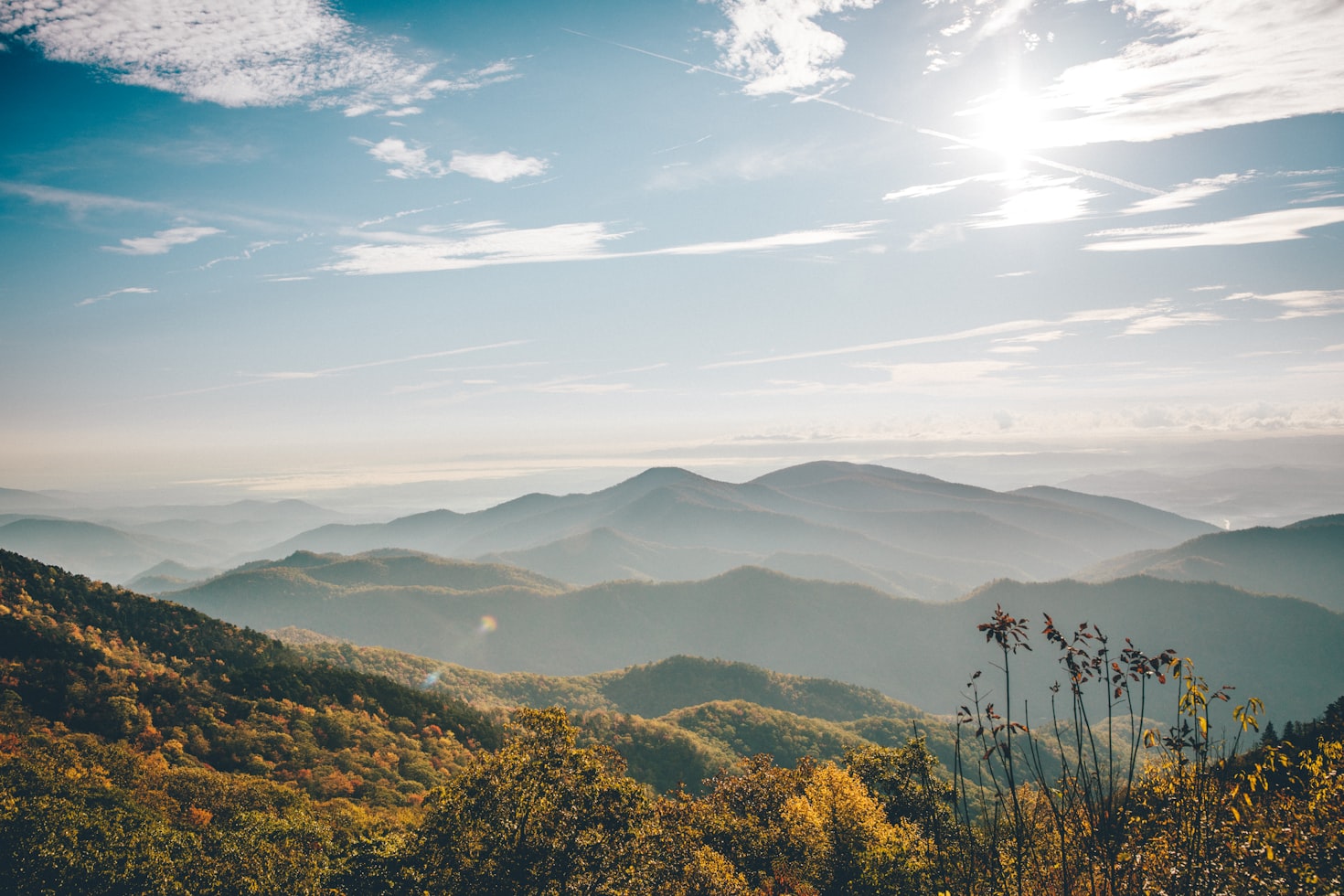
You signed up for Blue Ridge because someone called it America's toughest road marathon and something in you wanted to know what that meant. That's the right reason. This is not a PR course, not a BQ attempt, not a race you run to negative split. You run Blue Ridge because you want to find out what you're made of on a mountain, three of them, actually, and because the Blue Ridge Parkway at sunrise, 2,140 feet above sea level, is one of the more remarkable places you can be on a Saturday morning in April.
The course starts and finishes at Elmwood Park in downtown Roanoke and goes out-and-back through the Blue Ridge Mountains. The first half takes you through South Roanoke's residential neighborhoods, up Mill Mountain (712 feet, 7.6% average grade, the 88.5-foot neon Roanoke Star visible from the valley floor), back down the original mountain road through Peakwood, along the Roanoke River Greenway, and up Roanoke Mountain via Blue Ridge Parkway switchbacks. Then the course turns around and comes home through the Parkway's hardest climb, Peakwood again, Grandin Village, and back into downtown. 3,587 feet of climbing. 3,602 feet of descent. Almost perfectly net flat, just distributed across terrain that is not.
A few things worth knowing before April 18. Effort-based pacing is not optional here, it's the only thing that works. Mill Mountain will add 90 to 150 seconds per mile on the climb regardless of fitness. The descent from it will want to take your quads if you let gravity run things. The Parkway Gut Punch at mile 16.78 gains 370 feet at 8.1% with 17 miles already behind you, and it is the section that breaks the most people on this course. Power-hiking is not a backup plan. It's strategy. The runners who finish strong at Blue Ridge are almost always the ones who were humble on Mill Mountain.
By terrain, exposure, and how effort changes across the race.
The race starts at 7:35am in Elmwood Park, across from the Roanoke City Market, a farmers market that has operated continuously on this block since 1922. The crowd is real and the energy is high and the first mile through downtown brick streets feels nothing like what is coming. The elevation rises about 200 feet through rolling residential streets before the mountain begins. Go out conservatively. Not "conservatively for a tough race." Actually conservatively. Add 25 seconds per mile and stay there.
Aid stations: roughly every 1.5 miles throughout
The course moves into South Roanoke, one of the city's most preserved early-20th-century neighborhoods. Mature oaks and maples close overhead, 55% shade, quiet streets, neighborhood spectators in driveways. The grade through here is honest but not severe. This is the last section where controlled effort is achievable without climbing legs.
Settle in. Not because it's easy, it isn't, but because the alternative is arriving at the base of Mill Mountain already in debt.
This is the one. 712 feet of gain over roughly 1.8 miles at 7.6% average grade. Pitches near the summit approach 12%. This is the hardest single climb in American road marathon racing and it starts at mile 4.74, when your legs are fresh enough to do real damage to themselves if you let them.
The Roanoke Star sits at the top, an 88.5-foot neon-lit landmark erected in 1949, one of the largest illuminated stars in the world. It has been visible from the Roanoke Valley floor since your grandparents were young. You pass directly beneath it at the summit. The forested climb provides 70% shade, which is the only thing that will feel kind about this section.
Power-hike anything above 10% grade. Run by effort on everything else. Expect 90 to 150 seconds per mile over goal pace and treat that as the plan. Runners who race Mill Mountain blow up on the Parkway. Runners who hike it strategically finish strong in Grandin Village.
The course descends on Prospect Avenue, the original road up Mill Mountain. Steep. Winding. Shaded switchbacks through Peakwood, the quiet residential neighborhood on the mountain's flanks. Your legs will want to open up. The descent will want to carry you.
Don't let it. Short stride, slight forward lean, controlled turnover. Aggressive downhill running here causes cramping and quad damage at mile 20. Budget 15 to 20 seconds per mile faster than goal pace as the ceiling, not the floor. The Roanoke River Greenway is at the bottom. You need legs to run it.
Flat ground. The sound of the Roanoke River. Dappled shade from riverside trees. After Mill Mountain, this section feels almost surreal.
It is a recovery window and it is the only one the course gives you. Eat your gel. Drink at every station. Let your legs loosen from the descent. The river corridor is peaceful in a way that makes it easy to forget that Roanoke Mountain is at mile 11.1. Don't forget.
The second summit. 441 feet at 5.7% from mile 11.1 to 12.57, with a maximum grade of 12.1% on the Blue Ridge Parkway switchbacks. The views into the Roanoke Valley at the overlooks are legitimately dramatic, 25% shade up here, open sky, exposed ridgeline.
Your legs think they have earned a break after the river. They have not. Power-hike the steep pitches again. Same math as Mill Mountain, smaller scale. At the turnaround, you start heading home, which means the Parkway Gut Punch is now in front of you.
This is where Blue Ridge breaks people.
Miles 16.78 to 17.64: 370 feet at 8.1% average grade. Then miles 17.96 to 18.4 immediately after: 205 feet at 9.0%. Back to back. With 17 miles already in the legs. Glycogen depleted. Quads carrying the Mill Mountain descent. 10% shade and NW wind from the open parkway exposure.
There is no trick to this section. There is no way to make it feel good at mile 17. The runners who survive it are the ones who power-hike the steepest pitches without apology, run by effort rather than pace, and remind themselves that Peakwood is on the other side.
Budget 90 seconds per mile over goal pace. Treat it as the plan.
Peakwood Avenue at mile 19.51. 154 feet at 7.7% average grade. The last significant wall on the course, arriving after everything the Parkway just did to you.
What makes Peakwood different is the locals. Every year, residents line Peakwood Avenue with champagne toasts, music, and noise. It is the most celebrated single stretch of spectator support on the course, and it arrives at the exact moment you need it most. You will hear them before you see them. The crowd is small in number and enormous in effect.
Power-hike the steepest pitches one more time. At the top, the course tips downhill toward Grandin Village and the math finally starts working in your favor.
The course drops through Grandin Village, independent shops, the historic Grandin Theatre, coffee house patrons pausing to cheer. The grades are gentle and mostly downhill. After 21 miles in the Blue Ridge Mountains, this neighborhood feels like civilization.
If you ran the mountains conservatively, this is your payoff section. You start passing people. The crowd here is real and warm and actually knows what you've been through. Let it carry you. The final 2 miles are ahead.
The same streets where it started. The City Market. Elmwood Park. The crowd at maximum density.
You have run one of the most difficult road marathons in the United States. The terrain is flat to gently downhill for almost all of it. There is a short uphill kick in the final tenth of a mile to the finish line. After everything before it, you won't notice.
Leave it all here.
You don't need to remember all of this on April 18. We give you a voice in your ear that knows when to hike, when to run, and how to manage the Parkway when it arrives at mile 16 with everything you have left.
This isn't a generic plan. It's built around this course.
Check it outFree · iPhone + Apple Watch
This race changes every few miles, and not gradually. Downtown energy, then quiet residential streets, then a forested mountain, then a river path, then a ridgeline. It is genuinely beautiful in a way that helps when it gets hard, which it does, repeatedly, and on a schedule that is not negotiable.
The things that end people's races here are predictable. Going out too fast in the first four miles before the mountain. Running Mill Mountain instead of hiking the steep sections. Letting gravity take over on the descent and arriving at the river with trashed quads. The Parkway Gut Punch at mile 16 is coming for everyone, the only question is what you bring into it.
Run the mountains with patience, use the river miles to reset, and get to Peakwood with something left. If you do that, Grandin Village and the downtown finish feel like exactly what they should feel like: the end of something genuinely hard, run well.
You don't need to remember all of this on race day. We give you a voice in your ear that knows when to hike, when to ease off, and how to pace three summits without blowing up on the second one.
Sally's a good fit here. No flinching, no sugarcoating, and exactly the voice you want when the Parkway Gut Punch arrives at mile 17 and you need someone who's going to tell you what's ahead without pretending it's easy.
This isn't a generic plan. It's built around this course.
Check it outFree · iPhone + Apple Watch