OKC Memorial
April 26, 2026 @ 6:30 AM CT
okc memorial marathon
Marathon BQ Eligible Difficulty ★★☆☆☆

The race begins with 168 seconds of silence. Then you run past 168 banners, one for every life lost on April 19, 1995. A BQ-eligible loop through honky-tonk history, oil-field capitol grounds, and the most generous neighborhoods in American marathoning, with 4 exposed miles at Lake Hefner that will remind you this is still Oklahoma.

PaceKit By PaceKit Team · Updated April 2026 · Built from course data, historical conditions, and runner reports
Course Difficulty
2/5
Single loop through OKC neighborhoods. 793 ft total climbing. Lake Hefner wind exposure at miles 10-14. A 3-mile climb from mile 21 to 24 that arrives when you're most tired.
Climbing
Steepness
Exposure
Placement
What You Need to Know
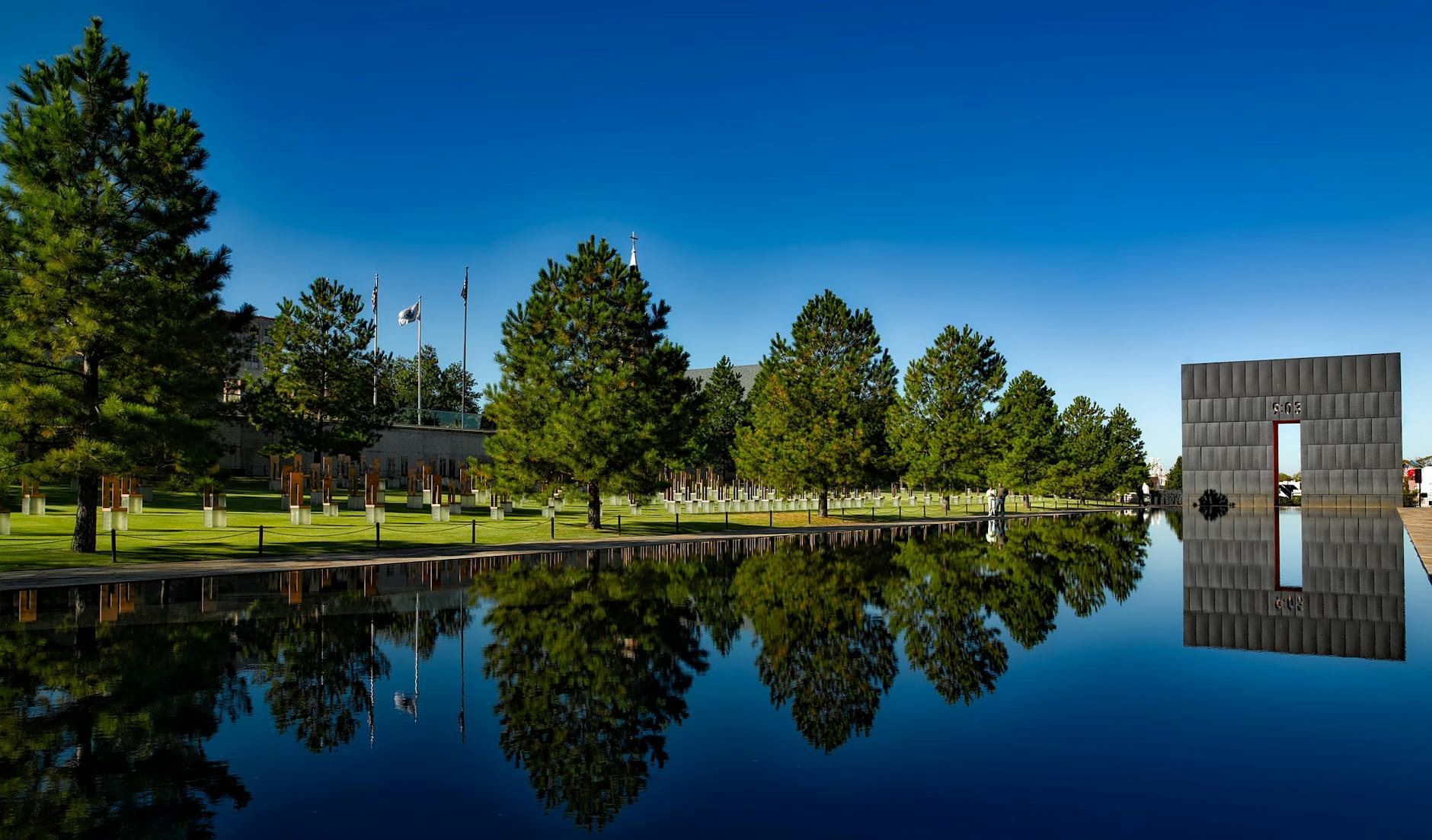
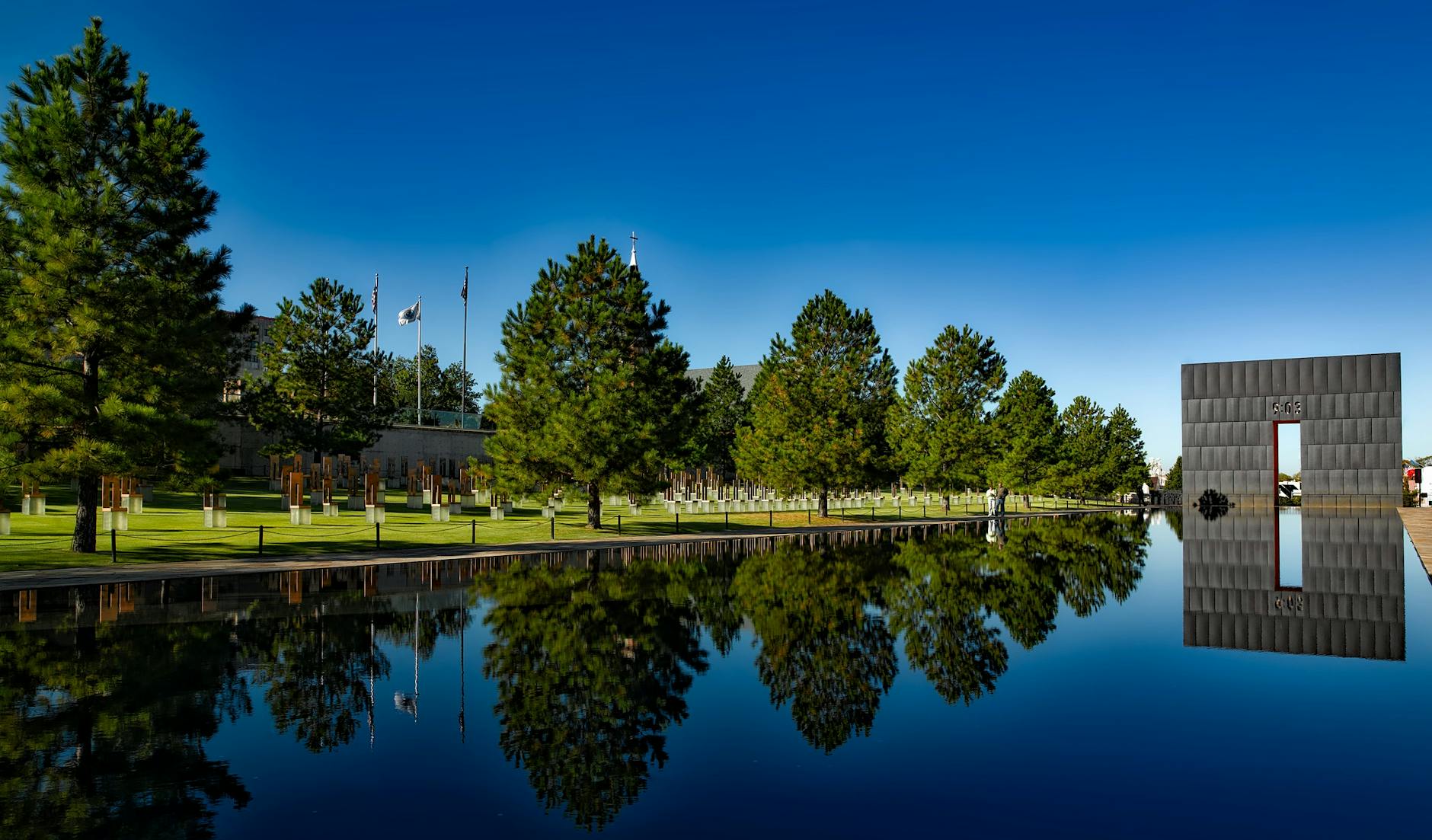
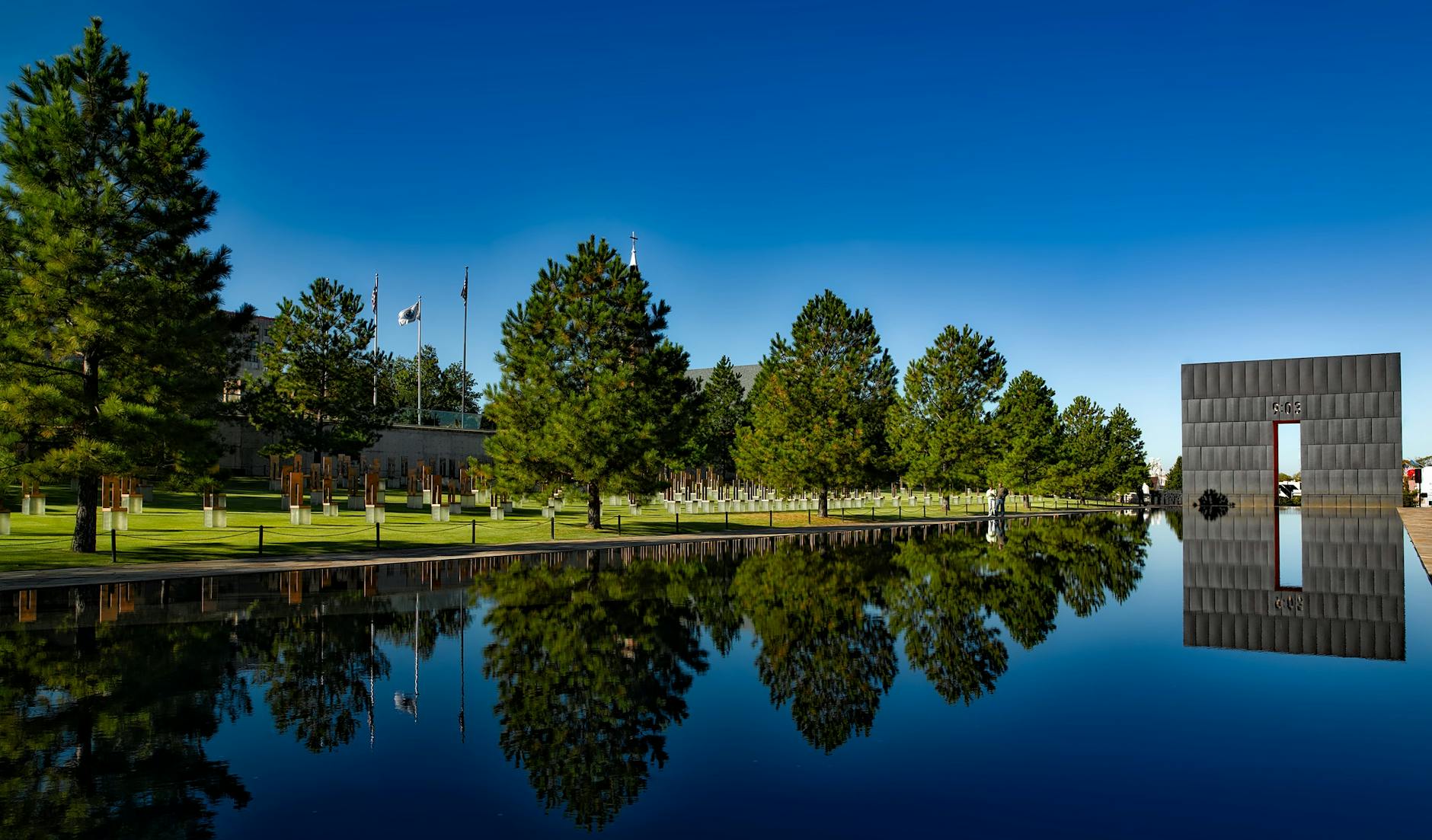
  1. 168 SECONDS OF SILENCE The race starts at the 9:03 Gate of the Oklahoma City National Memorial. Before the gun, every runner stands in silence, one second for every person killed in the 1995 bombing. It will be the quietest start of any marathon you'll ever run.
  2. LAKE HEFNER WILL FIND YOU Miles 10-14. Open water. Open sky. 5% shade. Exposed southern wind. Oklahoma's prevailing winds average 12-15 mph in late April, and there's nothing between you and them out here. This is where the race gets honest.
  3. THE CLIMB IS AT MILE 21, NOT MILE 5 The longest sustained climb on the course, 130 feet over 3 miles from mile 21 to 24, comes when you're most tired. It's only a 0.8% average grade. At mile 22, it won't feel like 0.8%.
  4. GORILLA HILL NW 40th and Shartel. Named one of the four coolest aid stations in America by Outside Magazine. Spectators in banana costumes handing out bananas. Balloon arches. The neighborhood throws a full block party. You'll hear it before you see it.
  5. THE NEIGHBORHOODS RUN THIS RACE Unofficial aid stations with beer, jello shots, oranges, and pickle juice between every official stop. Residents set up tailgates and bouncy castles. Runners consistently report hearing "thank you for running" thousands of times over 26.2 miles. This city takes this race personally.
Elevation Profile
Memorial Bricktown Lake Hefner Gorilla Hill
the brief

This breakdown is based on detailed course mapping, historical race conditions, and real runner feedback from past years.

You didn't sign up for this because it's fast. You signed up because of what it means. The Oklahoma City Memorial Marathon is the largest annual fundraiser for the Oklahoma City National Memorial & Museum, and every dollar from every entry goes to preserving the memory of the 168 people killed on April 19, 1995. The race starts at the 9:03 Gate, one minute after the bomb went off, and finishes at Scissortail Park, the city's newest 70-acre downtown green space. In between, you pass 168 banners, each one carrying a name. Runner's World called it one of 12 "must-run" marathons. They were right.

The course is a single loop through Oklahoma City's best neighborhoods (Heritage Hills, Mesta Park, Crown Heights) with a detour northwest to Lake Hefner that changes the character of the race entirely. The first 8 miles are tree-lined and well-supported. Then the trees disappear, the lake opens up, and for four miles you're running on exposed pavement with 5% shade and a south wind that nobody warned you about. The back half returns to residential streets, but not before a 3-mile climb from mile 21 to 24 that, on paper, looks like nothing. On legs, it feels like everything. 793 feet of total climbing isn't dramatic. It's cumulative. And in late April Oklahoma heat, cumulative is the problem.

The good news: this is a BQ-eligible, USATF-sanctioned course with aid every single mile, medical stations every other mile starting at 5, and the most enthusiastic neighborhood support of any race in the country. The communities along this course don't just tolerate the marathon. They celebrate it. Gorilla Hill at NW 40th is a full block party with banana-costumed spectators. Heritage Hills residents line their porches. The unofficial aid stations (beer, pickle juice, popsicles) outnumber the official ones. You will not feel alone on this course. Even when Lake Hefner tries to make you feel that way.

Your Priorities
01
Don't race the first 8 miles. The start is emotional and the first 8 miles are fast: tree-lined, sheltered from wind, moderate crowd support. But this is a back-loaded course. The hardest terrain comes after mile 20, and Lake Hefner (miles 10-14) will cook your energy if you've already borrowed from it. Run the first 8 miles at goal pace or slower. Bank nothing. The course gives you nothing back later.
02
Survive Lake Hefner, don't fight it. Miles 10-14. 5% shade. Exposed south wind. Wide open water views on one side, suburban sprawl on the other. The wind will cost you 15-20 seconds per mile if you try to hold pace. Don't. Run on effort. Tuck behind a group if you can find one. The tree cover returns at mile 15, and the residential neighborhoods will feel like a different race.
03
Know what mile 21 is asking you to do. From mile 21 to 24, you climb 130 feet. That's less than two feet per minute at a 10-minute pace. You will barely notice it on an elevation chart. You will absolutely notice it on your legs. This climb comes after the Lake Hefner wind, after 20 miles of running, and before the final descent into downtown. Shorten your stride, stay patient, and let miles 24-26 carry you. It's all downhill to Scissortail Park.

segment breakdown

By terrain, exposure, and how effort changes across the race.

the start Miles 0-2
15% shadeSheltered Flat
the start

The start line is at the 9:03 Gate of the Oklahoma City National Memorial. On the other side of the reflecting pool, 168 empty chairs, bronze, glass, and stone, sit in nine rows. Each one carries a name. Nineteen of them are smaller than the rest. Those are the children. The bomb went off at 9:02 AM on April 19, 1995. The 9:01 Gate marks the last moment of innocence. The 9:03 Gate marks the first moment of everything that came after. You start your race in between.

Before the gun, 168 seconds of silence. Nearly three full minutes of 25,000 people standing still. It's the quietest moment in any marathon in the country. Then you run.

The first two miles move through downtown and into Bricktown, OKC's revitalized entertainment district with its canal, restaurants, and public art. The terrain is gentle, about 48 feet of gain from mile 1.8 to 2.6 at a 1.1% grade. Nothing dramatic. Spectator support is heavy. You're still running with the half marathoners, quarter marathoners, and relay teams. Expect congestion through the first half mile, then it spreads.

Aid: Hydration stations every mile. Water + Powerade. Some stations have oranges, pretzels, and snacks. Shade: 15%. Wind: Sheltered, buildings block the prevailing south wind.

north through midtown Miles 2-5
20% shadeS partial +48 ft
north through midtown

The course pushes north through Automobile Alley, a stretch of Broadway that was once packed with car dealerships and is now a corridor of art deco facades, coffee shops, and restaurants. The vibe shifts from solemn to urban. Crowds thin slightly from the start, but support is still moderate.

Around mile 3, you approach the Oklahoma State Capitol complex. Here's a piece of trivia worth knowing: this is the only state capitol in the country that was once surrounded by active oil wells. Twenty-four of them. The most famous, Petunia #1, was drilled in 1941 directly in a flower bed on the capitol's south lawn. It was slant-drilled a mile and a quarter beneath the building, produced 1.5 million barrels of oil and 1.6 billion cubic feet of gas before running dry in 1986. The derrick is still there. You'll run past it.

The terrain through here is gentle. A 48-foot climb from mile 1.8 to 2.6 (1.1%) and another 48-foot gain from mile 5.4 to 6.7. Nothing that registers in the moment. But the elevation is trending up. You're climbing from downtown (~1,175 ft) toward the northwest neighborhoods (~1,230 ft), and every foot costs a little more than it should at this point in a marathon. Trust that. Stay patient.

Aid: Hydration stations every mile. Shade: 20%. Art deco buildings provide intermittent shade. Wind: Partial, south wind starting to appear.

heritage hills to gorilla hill Miles 5-8
45% shadePartial +39 ft
heritage hills to gorilla hill

This is where the course gets beautiful. Heritage Hills is one of OKC's most prestigious historic districts: grand early 1900s homes, mature oak and elm trees arching over the streets, quiet winding roads. The shade coverage jumps to 45%, the best on the course. After five miles of exposed downtown roads, the canopy feels like air conditioning.

The crowds pick up here. Heritage Hills residents come out on their porches. The unofficial aid stations begin appearing: neighbors with folding tables, coolers of beer, signs that say things worth reading. This is the first glimpse of what makes this race different from every other marathon. The people along this course aren't spectators. They're participants.

At mile 6.5, there's a short 2.5% grade hill, 39 feet of gain over a third of a mile. It's the punchiest grade you'll see before Lake Hefner and the only climb in this section that registers.

And then, around mile 7: Gorilla Hill. NW 40th Street and Shartel Avenue, in the Crown Heights-Edgemere Heights neighborhood. Outside Magazine named it one of the four coolest aid stations in America. The neighborhood goes all out: balloon arches, banana costumes, bananas (the real kind), an energy that is completely out of proportion to a residential intersection in Oklahoma City. You'll hear the noise from two blocks away. It is, without question, the best single moment on the course for spectator support.

Enjoy it. Lake Hefner is next.

Aid: Hydration stations every mile. GU at mile 8. Shade: 45%, best shade section. Wind: Partial, trees break the wind. Medical: Station at mile 5.

lake hefner Miles 8-14
5% shadeS exposed +50 ft
lake hefner

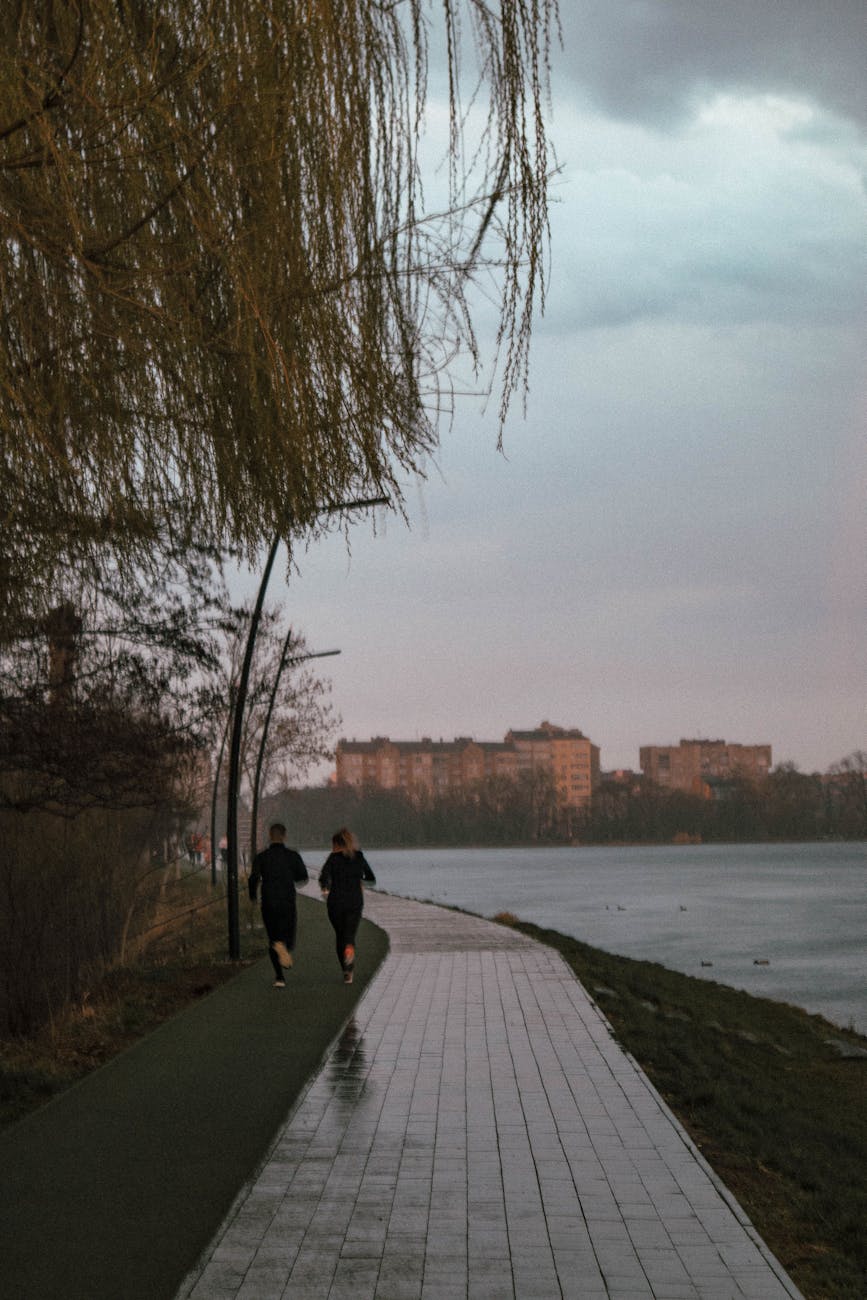
The trees end. The sky opens. And for the next six miles, you're running near the shores of Lake Hefner, a large urban reservoir on the northwest side of the city used for sailing and recreation. On a calm day, the wide-open views of water and Oklahoma sky are beautiful. On a windy day, and most late-April days in Oklahoma are windy days, this stretch is relentless.

Here's what you're dealing with: 5% shade coverage. Exposed south wind. No tree canopy. No building shelter. The neighborhoods transition from established residential to open suburban, and the course runs along roads with nothing to break the wind coming off the lake. The local running club's training plan specifically notes that running into the wind at Lake Hefner "constitutes intensity." They're not being dramatic.

Expect to lose 15-20 seconds per mile versus your sheltered pace. Don't fight it. Run on perceived effort, not your watch. If you can find a group to draft behind, do it. This is where discipline from the first 8 miles pays off. If you ran those miles smart, Lake Hefner is manageable. If you went out hot, this is where you start paying.

The terrain adds insult: a 50-foot climb at mile 8.3 (1.4%), followed by a 42-foot gain at mile 9.5 (1.1%), then another 50-foot climb at mile 10.4 (2.1%). None are steep. All are exposed. And miles 13-16 add a long, flat 46-foot rise that barely registers on paper but sits on top of everything else.

One critical note: the half marathoners split off at mile 7.5. From here, you're running with full marathoners only. The field thins dramatically. Lake Hefner is where that absence hits hardest.

Aid: Hydration stations every mile. GU at miles 10 and 14. Shade: 5%, the lowest on the course. Wind: Exposed south wind, the worst wind section. Medical: Stations at miles 7, 9, 11, 13.

crown heights & mesta park Miles 14-18
40% shadeSE partial Flat
crown heights & mesta park

The course turns south toward downtown, and everything changes. Tree cover returns, 40%. The wind shifts from direct headwind to partial exposure. And the neighborhoods of Crown Heights and Mesta Park wrap around you with exactly the kind of support you need after six miles in the open.

Mesta Park is one of OKC's oldest residential neighborhoods: early 20th-century bungalows, mature trees, charm. Crown Heights has a mid-century feel, well-kept homes, moderate crowd support. Residents are out. The unofficial aid stations are back. The energy that disappeared at Lake Hefner comes flooding back.

The terrain is cooperative. Nothing notable in terms of climbs. These are recovery miles, or they should be, if you ran Lake Hefner smart. Use them. Settle into goal pace. Hydrate. This is your window to regroup before the final act.

One thing to note: GU is available at mile 14 and again at mile 17. If you're relying on course nutrition, these are the last two gel stations before the finish. Take what you need.

Aid: Hydration stations every mile. GU at miles 14 and 17. Shade: 40%, second-best shade section. Wind: Partial, shifting to SE. Medical: Stations at miles 15 and 17.

the drop and the turn Miles 18-21
15% shadeS partial -77 ft
the drop and the turn

This is the gift. From mile 18 to 20, the course drops from roughly 1,219 feet to 1,142 feet, 77 feet of descent, the most substantial downhill on the course. It feels like relief. It feels like the race is being kind.

It is being kind. But the kindness has a price tag. Because after mile 20, the course turns around and starts climbing back.

The temptation here is to let the downhill carry you into a pace you haven't earned. Don't. The descent is gentle enough (nothing that will wreck your quads), but if you push it, you'll arrive at the bottom of mile 21 with empty legs and a 3-mile climb ahead of you. Take the free speed, but stay controlled. Run 5 seconds per mile faster than goal. No more.

Spectator support is light through here. The scenery isn't memorable. This is transitional mileage. The course is repositioning you for the final act. The Classen Curve mixed-use development marks mile 20 and is a recognizable landmark. From here, the climbing begins.

Aid: Hydration stations every mile. Shade: 15%. Wind: Partial south wind, some building shelter. Medical: Stations at miles 19, 20.

the long climb home Miles 21-24
20% shadeS partial +108 ft
the long climb home

Here it is. The section that defines your race.

From mile 21 to mile 24, the course climbs from roughly 1,147 feet to 1,255 feet. That's 108 feet of gain over three miles, a 0.8% average grade. On fresh legs, at mile 3, you wouldn't notice this. At mile 22, after Lake Hefner, after 20+ miles, after the deceptive descent that just emptied your reserves, 0.8% feels like a wall.

Runners consistently call this out. One review: "Miles 21-24 are a long, slow incline: one foot in front of the other and you'll get it." Another: "The hills are worse than advertised." The elevation profile of this race looks gentle. It is gentle. The problem is timing. Every hard feature on this course (the wind, the exposure, the climbing) arrives in the back half.

The spectator support picks up slightly from the Lake Hefner lows, but it's still light-to-moderate. Medical stations are now every mile (from mile 19 onward). Use them if you need to. The aid stations are your mile markers, water and Powerade at every single one.

The mental game here is simple: this is three miles. You've already done 21 of them. The top of the climb is mile 24, and from there it's all downhill to the finish. Shorten your stride. Keep your cadence up. Don't look at pace. Look at the mile markers. Three of them, and then it's over.

Aid: Hydration stations every mile. Shade: 20%, partial tree cover increasing toward mile 24. Wind: Partial south wind. Medical: Stations at miles 21, 22, 23, 24.

the finish Miles 24-26.2
20% shadeSheltered Downhill
the finish

The climb is done. From mile 24 to the finish, the course descends back into downtown. The crowds build. Spectators have been here since the start, and now they're lining the final chute, the densest support since mile 2.

You're running toward Scissortail Park, OKC's premier 70-acre downtown green space, opened in 2019. The Finish Line Festival is already going. You can hear it. Music, food, medals, the post-race party that runners consistently praise.

The terrain is cooperative. Gentle downhill. The wind is sheltered again by downtown structures. Your legs are heavy but the work is done. The last mile is about finishing what started with 168 seconds of silence.

At the memorial, some runners leave their bibs and medals on the 168 empty chairs. It's become a quiet tradition. You don't have to. But you might want to.

Aid: Final hydration stations. Shade: 20%, building shade returns downtown. Wind: Sheltered, downtown structures block the wind. Medical: Stations every mile through the finish.

get your race partner

You don't need to remember all of this on April 26. We give you a voice in your ear that knows this course, the Lake Hefner wind, the 3-mile climb at mile 21, and the neighborhoods that will carry you through the miles in between.

This isn't a generic plan. It's built around this course.

Get your race partner

Free · iPhone + Apple Watch

Answered by Us (8 answers)

Starting at the 9:03 Gate: what it means to run a memorial
168 seconds of silence before the gun
168 banners, 26.2 miles
How the course keeps the memory present
Gorilla Hill and the hills nobody expects
750 ft of elevation change in 'flat' Oklahoma
Oklahoma wind: the variable you can't train away
15-20 mph south wind and what it costs you
Is the OKC Memorial Marathon a good BQ course?
BQ eligible, but Lake Hefner and miles 21-24 catch people
The neighborhoods and the Oklahoma Standard
Why crowd support here rivals the majors
Why your bib is also a museum ticket
The 168 chairs, the Survivor Tree, and the museum
OKC as a race weekend
Bricktown, Scissortail Park, and a city that surprises

final notes

This is a straightforward course on paper. 793 feet of total climbing on a single loop, a 2/5 difficulty rating, BQ-eligible, aid every mile. None of the individual features, no single hill, no single stretch, would stand out on their own. What makes this race harder than it looks is the sequencing. The wind arrives at mile 10. The exposure arrives with it. The climbing arrives at mile 21. And the heat, which is reliably warm in late April OKC, compounds everything.

The first 8 miles are the best miles. Tree canopy, historic neighborhoods, Gorilla Hill, moderate crowds, and a south wind blocked by buildings and oaks. The middle miles at Lake Hefner strip all of that away and ask you to run 4-6 miles in the open with no shade and no shelter. And then the back half gives you a descent you'll want to trust, followed by a 3-mile climb you won't see coming. Every hard mile on this course is in the second half.

Stay conservative through Heritage Hills. Run Lake Hefner on effort, not pace. Take the descent at miles 18-20 without pressing, and arrive at mile 21 with something left. If you do that, the long climb home is annoying, not devastating. And the final descent into Scissortail Park, with the crowds building and the finish festival pulling you in, is one of the best final miles in the sport. Especially when you remember what you're running for.

run it with someone who knows the course

You don't need to remember all of this on race day. We give you a voice in your ear that knows what's coming, the Lake Hefner exposure, the 3-mile climb at mile 21, the neighborhoods that carry you, and the final descent into Scissortail Park.

Jordan's a good fit here. Dry, grounded, and exactly the voice you want on a course that carries real weight, where someone needs to keep you honest through the Oklahoma wind and present through the miles that matter most.

This isn't a generic plan. It's built around this course.

Get your race partner

Free · iPhone + Apple Watch