168 banners, 26.2 miles: how the course keeps the memory present
 By PaceKit Team · Updated April 2026
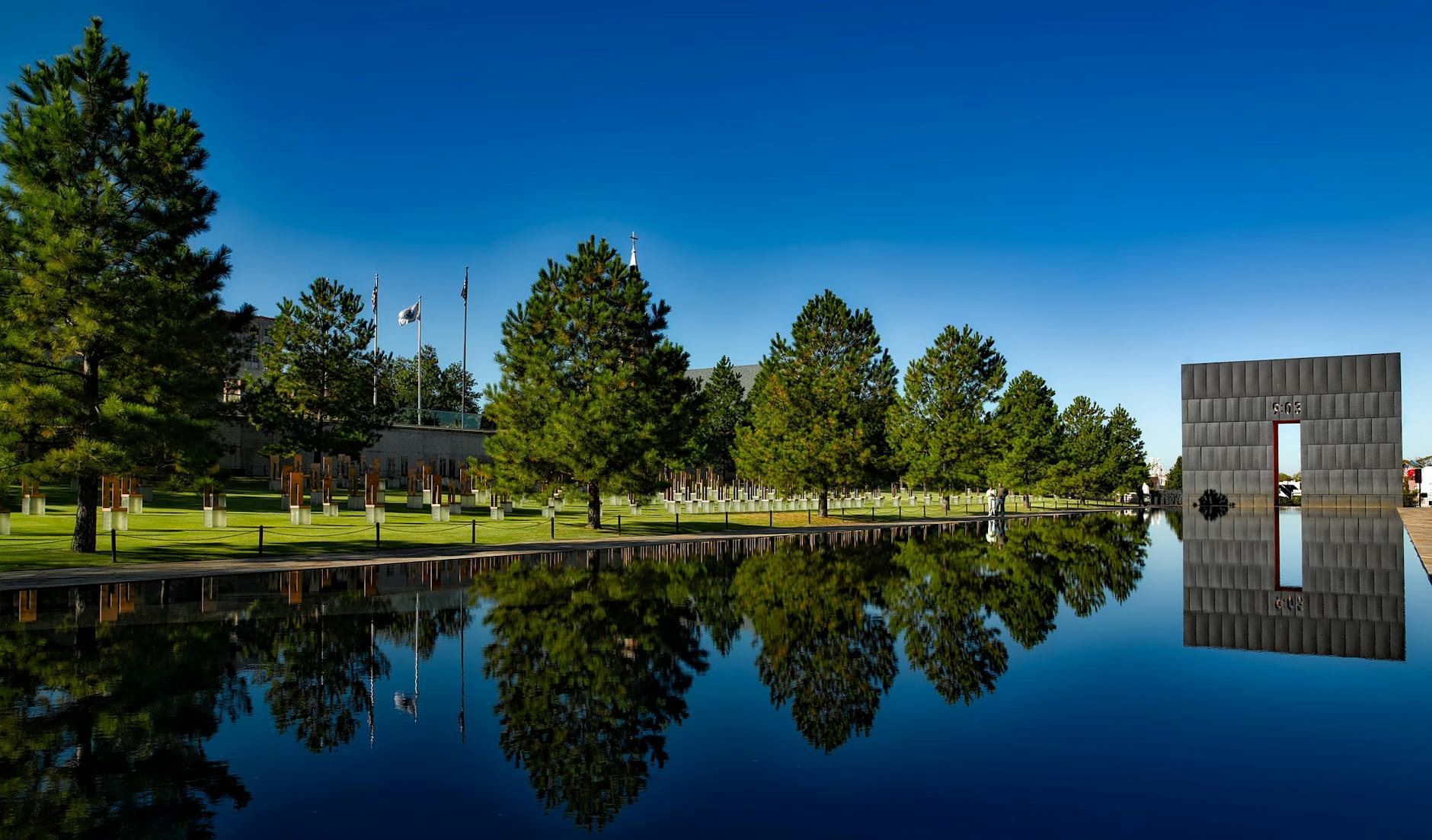
Along the Oklahoma City Memorial Marathon course, 168 banners are hung on light poles and structures. Each banner bears the name of one of the 168 people killed in the bombing. They are spaced throughout the 26.2 miles, through downtown, through Bricktown, through the State Capitol district, through Nichols Hills and The Village, through the residential neighborhoods that make up the course. You will pass them for the entire race.
The effect is cumulative and specific. In the first few miles, you notice the banners. You read a name. You think about it for a block. Then another name. And another. By mile 10, the banners have become part of the visual rhythm of the course, a constant reminder that the race you're running has a purpose beyond the finish line. By mile 20, when your body is hurting and your mind is looking for reasons to keep going, the banners provide one. You are not running for a time. You are running for the names on those banners.
Runners who've done OKC describe the banners in language they don't use for any other course feature. Not "cool" or "scenic" or "well-organized." They use words like "moving" and "humbling" and "I was so grateful to be able to participate." One runner wrote: "Your bib gets you free admission to the Oklahoma City National Memorial Museum, a must see. Visit the memorial museum after the race. Don't skip it."
The banners are not decoration. They are the course. Everything else, the neighborhoods, the crowd support, the hills, the finish festival, exists around and in service of those 168 names.