the rail trail: miles 20 to 25
 By PaceKit Team · Updated April 2026
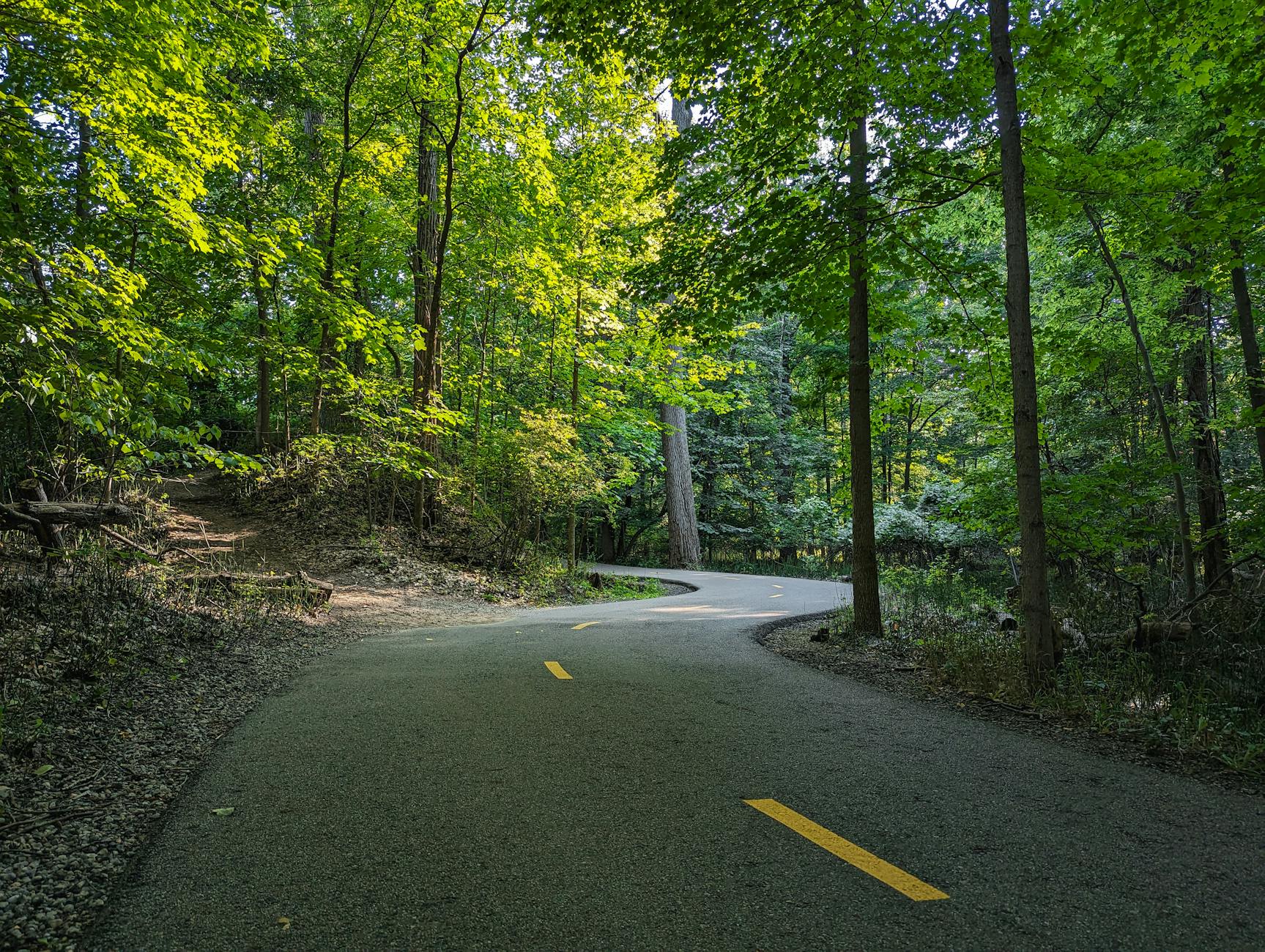
The Glass City Marathon's final miles run along a paved rail trail, and this stretch is the mental crux of the race. From approximately mile 20 to mile 25, you're on a straight, flat, paved bike trail with minimal spectator access, no turns, and limited visual landmarks. It's just you, the path, and whatever you brought mentally.
On a good day, when your legs are cooperating and your BQ pace is holding, this stretch feels efficient. The surface is smooth. The path is wide. There's nothing to slow you down or distract you. You can lock into your cadence and count the miles.
On a bad day, when you're hurting and the pace is slipping, this stretch is brutal. One runner described it as "a straight line for 5 miles, no crowd support, no scenery, just you and the home stretch." There are no turns to break the monotony. No spectator noise to pull you forward. The mile markers feel further apart than they are. This is where Glass City extracts its toll for being fast and flat everywhere else.
The preparation is mental, not physical. Know it's coming. Have a strategy for it. Some runners use the rail trail as their "music section" (save your playlist for miles 20 to 25). Others use it to focus on form cues. Others lock onto the runner in front of them and refuse to let the gap grow. The worst approach is to arrive at mile 20 expecting the same spectator energy that carried you through the Ottawa Hills neighborhoods in the first half. It's not there.
After the trail, the course returns to the University of Toledo campus for the final mile-plus into the Glass Bowl Stadium. The crowd reappears. The PA system becomes audible. And you finish on the field, inside a stadium, which is the reward for surviving the straightest, flattest, emptiest 5 miles in American BQ racing.